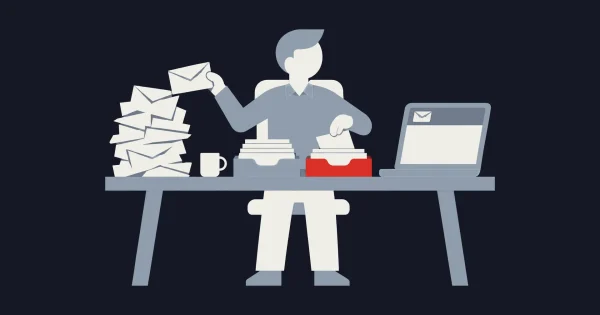
Email marketing for small business is using email to stay in touch with the people a business wants to win and keep. It works best when it starts with the people who already know you: customers, past customers, leads and people who asked for updates. If you run an Australian small business, you probably have that list already, and it may have gone quiet.
Dash builds websites, content and marketing automation for service businesses. Our own list sat untouched for years too. If you’d rather talk it through, book a complimentary strategy session with Dash.
Why do small businesses stop emailing their customers?
At Dash, when we’re flat out with client work, our own marketing is the first thing to slip. People had filled out forms on our website asking for updates, and we were falling behind on that promise.
In 2015 I wrote that we occasionally heard new clients say “I don’t have time to write newsletters”. Time is still part of it, as it was for us, but the reason isn’t a lack of email tools. More often, you’re afraid of annoying customers, getting unsubscribes or being told not to contact them again.
Those fears make sense when inboxes are full of spam, but your customers couldn’t care less about email itself. They care about what they’re trying to achieve, and an email only bothers them when it’s spam: unwanted, and nothing to do with their goals. Done well, email is the opposite of spam.
What does good email marketing for small business look like?
Good email marketing for small business lines up what your business is trying to do with what the people on your list are already trying to achieve. In Dash’s view, it’s then no longer the seller against the buyer. The seller is helping the buyer reach their own goals.
As I wrote in 2021, “holding on to happy clients is much more cost-effective than acquiring new ones”. When we kept in touch with our list consistently in the past, the biggest payoff was the unexpected: work we otherwise wouldn’t have known about.
Who is actually on your customer list?
Start by working out who is on your list, how each person got there and what they’re trying to achieve. Dash’s own list held current and past customers, leads we’d helped without paid work and people who had asked for updates on our website.
Write down roughly how many contacts you have and where they came from: people who bought from you, people who enquired and didn’t buy, and people who signed up on your website or handed you a business card at a networking event. Then note when each group last heard from you. These are the questions the strategy session booking form asks, so you’ll have your answers ready.
How someone got on your list also matters under Australia’s Spam Act 2003. Consent can be express, or inferred from a provable, ongoing relationship where the email relates to it, and you must be able to show it. Express consent is best practice.
What should you remove from an old email list?
Clean the list before you send anything, because a smaller list of real people is worth more than a big number that isn’t real. Start with what you can spot: broken or mistyped email addresses, duplicates, spam sign-ups from your website forms and general junk.
A professional list cleaning service goes further: it checks every address and flags the broken and spam ones unlikely to receive your emails. Or Dash can take care of the whole job, cleaning your list and walking you through the process.
You don’t have to guess who else doesn’t belong. Someone who joined to solve a problem they’ve since solved, or someone who ended up on your list by accident, will probably unsubscribe when your first emails arrive. When it’s the wrong people, that’s for the best.
What should you send first?
Write your first emails for your ideal customer: what they’re trying to achieve and what they’re trying to avoid. The people who see themselves in those emails respond.
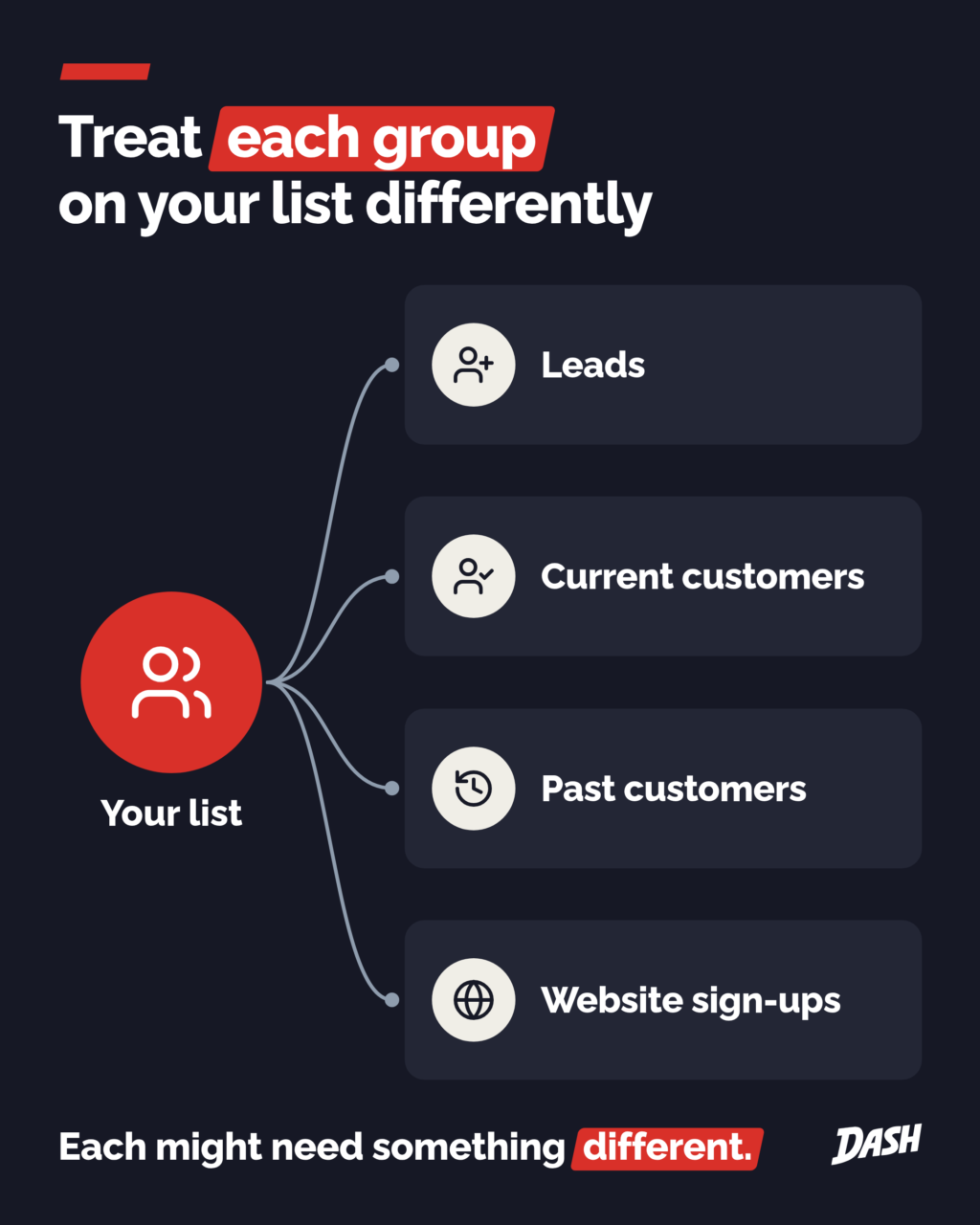
Then treat each group on your list differently. Dash plans for leads, current customers, past customers and website sign-ups as separate groups, because each might need something different.
A customer who uses one of your services may need another. Leads who didn’t buy may still be trying to solve the same problem, and past customers may know someone who needs you, so show them how to refer someone. From there, plan a consistent year of emails rather than one-off sends, built around what each group is trying to achieve.
How do you make it easy to unsubscribe?
Put the unsubscribe link where people can see it, and tell them they can also reply and ask to be taken off. Avoid the tricks often called dark patterns: hiding the unsubscribe link, making people retype their address, tick boxes or jump through hoops.
Dash never uses them. If you tell us you want to unsubscribe, then you’re unsubscribed. It’s that simple.
Australian law sets the floor: under the Spam Act, every marketing email must include a working unsubscribe, and a request takes effect within five business days. Unsubscribing can’t cost anything or need a login or extra personal details. This is a summary of the rules, not legal advice.
How did Fetch turn its list into a plan?
Fetch, a locally owned Berrimah business that’s a one-stop shop to keep Territory offices moving, wanted to email its list but wasn’t sure what to send. Together, Dash and Fetch split the list into business customers and consumers.
Then we planned a year so each group hears about Fetch’s other services. The aim is to help customers go from being a customer in one little area of the business to two or more. Fetch now runs that planned program with Dash.
That’s one strategy for one business. For yours, the same process might uncover something different: one ideal customer or several, one service or many.
Why plan your email marketing now?
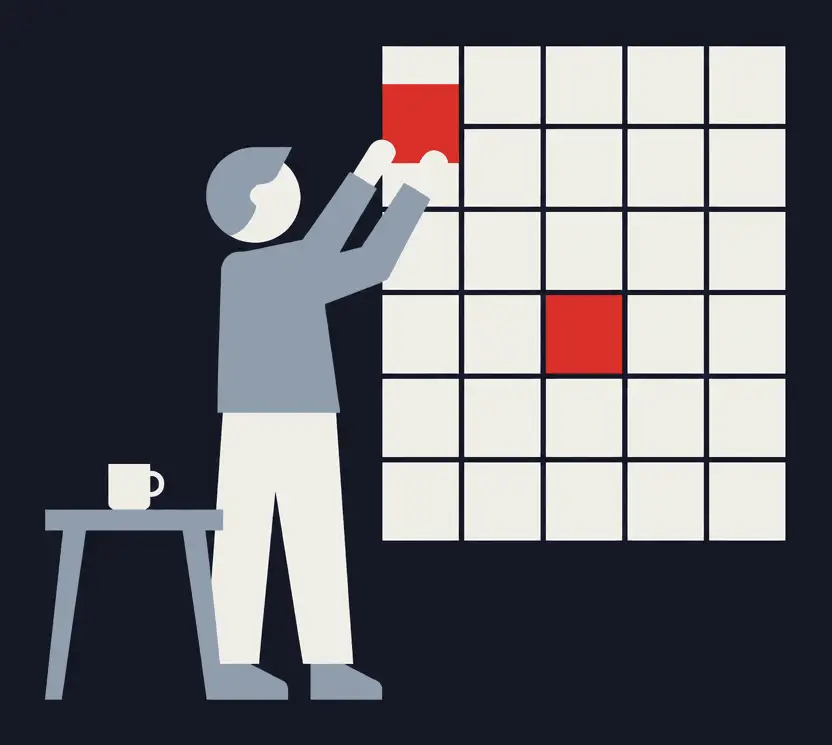
The new year is when you can put new plans in place and start doing what you know you should. Get clear and make a plan before the break, and it can launch in January. The alternative is another year of reacting to whichever potential customer yells the loudest.
Start with a complimentary strategy session
You can do the leg work yourself with the steps above: analyse your list, clean it and plan your content. Working with Dash gets you clarity faster and shortcuts the path to customers who respond.
The complimentary strategy session is a call of up to 20 minutes, booked with a form that asks about your list. You’ll leave knowing how you could use your list, the opportunity for your business and your next steps.
Not ready for a call? Dash’s free video walks you through cleaning, planning and sending, and how to apply each step to your business.
Frequently asked questions
What is email marketing for small business?
Email marketing for small business is using email to stay in touch with the people a business wants to win and keep, starting with customers, past customers, leads and subscribers who asked for updates. Dash begins with the list a business already has and who is on it, before anything is sent.
Do I need permission to email my customers in Australia?
Yes, under Australia’s Spam Act 2003, marketing emails need consent, either express or inferred from a provable, ongoing relationship the email relates to, and the business must be able to show it. Every marketing email also needs a working unsubscribe that takes effect within five business days. This is Dash’s plain-English summary, not legal advice.
Will emailing my old customer list make people unsubscribe?
Yes, some people will unsubscribe, and that is often a good result. People who joined years ago to solve a problem they have since solved, or who were never ideal customers, are better off the list. Dash cleans a list before the first send and makes leaving easy, so the list ends up with people who want to hear from the business.
How do you clean an old email list?
Clean an old email list before sending anything by removing broken and mistyped addresses, duplicates, spam sign-ups from website forms and general junk. Then let the first emails do the rest: written for the ideal customer, they draw a response from the people who belong, while an easy unsubscribe lets the rest leave. Dash works through this with clients before their first send.
What should a small business send to its email list?
A small business should send emails that line up what it offers with what the people on its list are trying to achieve, not things they don’t care about. Dash plans a year of emails around what each group on the list wants. For Fetch, a locally owned Berrimah business that’s a one-stop shop to keep Territory offices moving, that meant helping a customer of one service hear about the others.
Is it worth emailing customers who haven’t heard from you in years?
Yes, if you clean the list first and write about what those customers are trying to achieve. People who asked for updates are still owed them, and Dash’s own list went quiet for years too. Expect some unsubscribes from people whose problem is long solved: on a stale list they never had the chance to leave, so let them go easily.